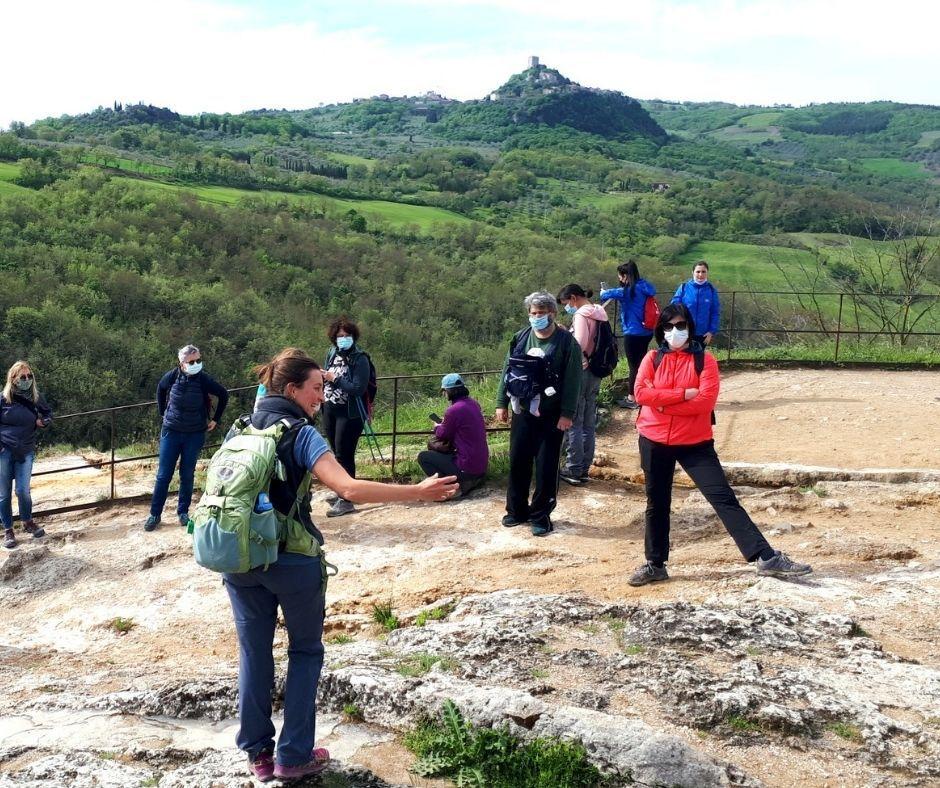
From 26 April 2021 in Italy, a decree law relating to measures to fight and prevent the contagion from COVID-19 has established new rules to be followed for the next few weeks: significant changes have been introduced that provide for a gradual reopening of activities, from schools to cinemas, from gyms to restaurants… On Sunday, finally, I was able to lead a group again.
My colleague Sara and I organized a walk in Bagno Vignoni. During the year I regularly go to this small village in the heart of the Val d’Orcia (it is also a stop of the Tuscan Splendor tour!) and every time it amazes me with its architectural uniqueness and its thermal waters that flow slowly and fill the air with their distinctive odor.
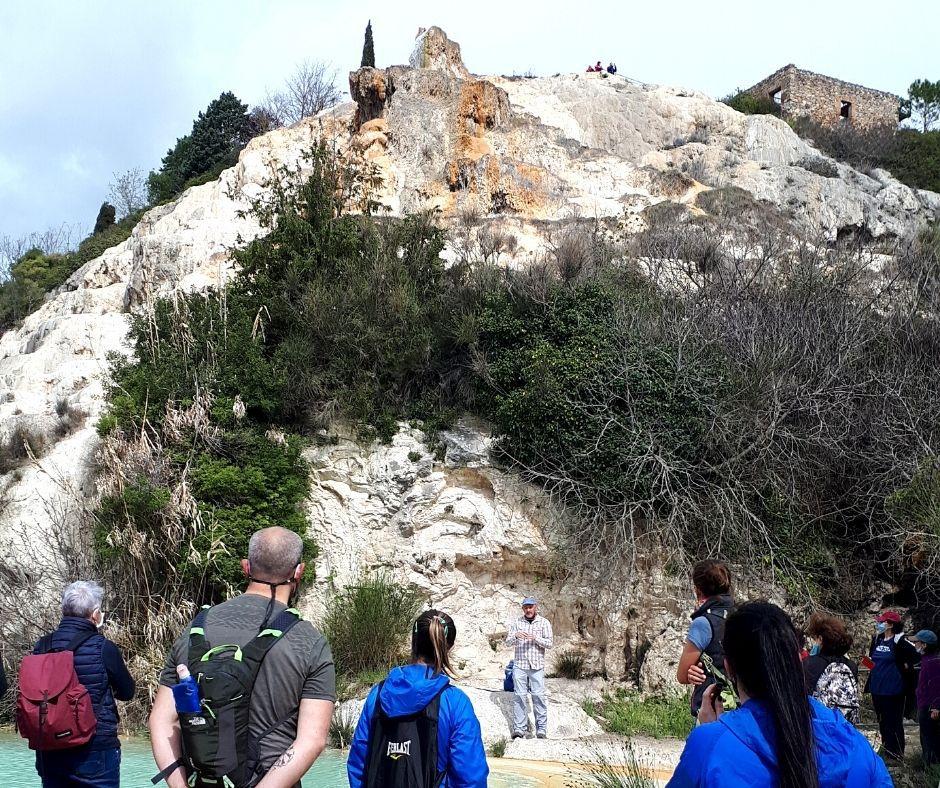
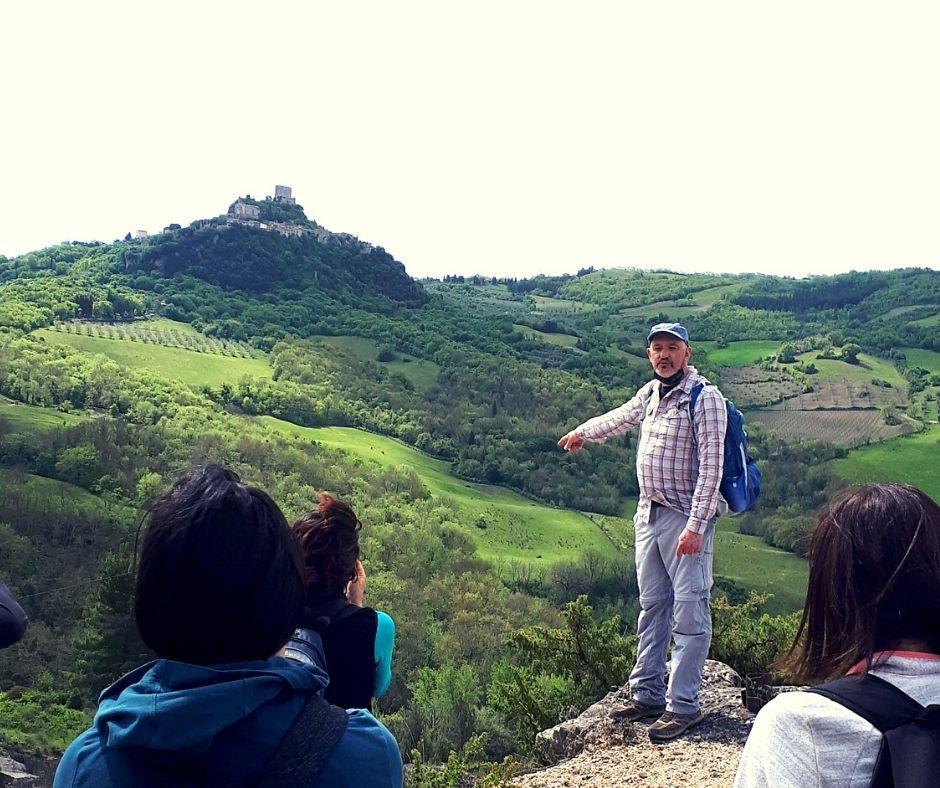
The loop path we walked led us to discover the village and the adjacent Valley of Mills and the travertine quarries. I am a geologist (you know this by now!) and Sara is an anthropologist. The geology of the area tells us how the travertine deposits were formed and the history of the men who inhabited it teaches us how over the centuries the travertine quarries and the presence of thermal baths (and the water itself) have contributed to the richness and beauty of the village and the surrounding area.
The presence of thermal water was also known in ancient times: archaeological finds from the Etruscan and Roman times testify to this. Numerous sources report the importance of Bagno Vignoni for the therapeutic use of its water as early as the twelfth century.
The central square develops around a rectangular pool dating back to the sixteenth century from which the water gushes gurgling at 56°C (133°F). From the main pool the water is channeled out of the village to be conveyed into a waterfall system that feeds the excavated mills in the rock: a hydraulic work that makes the whole Bagno Vignoni complex unique.
A fun fact! Generally, waterpower mills work during spring, autumn and winter but during the summer they stop because of drought. Well…in Bagno Vignoni, because of the constant flow spring, mills could work with no interruption. Quite a plus for the area, I would say!
The white stone that we see walking in the Valley of Mills is travertine! A sedimentary limestone rock that forms because of thermal spring water rich in calcium carbonate. Thanks to physical and chemical conditions, the calcium carbonate is deposited in crystals, thus creating what geologists call travertine deposits. Over the centuries the deposit will turn into travertine! You must admit that geology is a fascinating science!! 😁
Anyway, beauty, history, landscape and even travertine aside … Sunday, what really made me happy was to give a lecture about this to a real audience, while walking on a beautiful path! Walking and sharing this experience with others is the ordinary happiness that my work gives me … and finally this could happen again!