
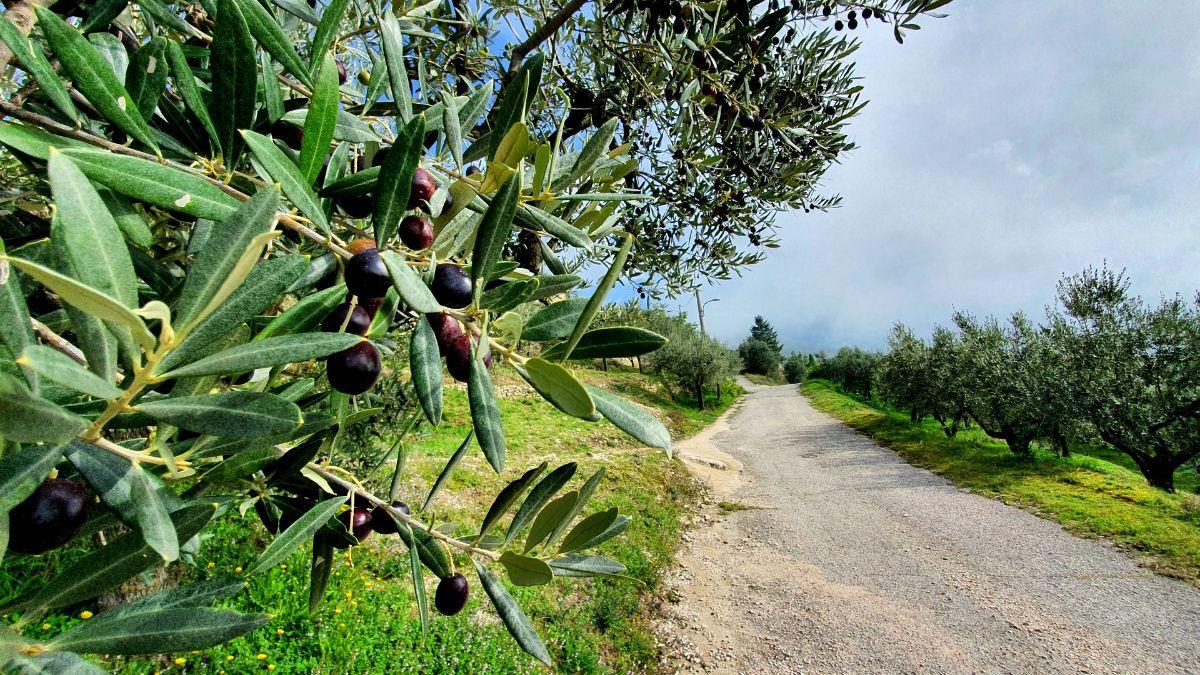
The rest of the olive tree

walk about italy
Winter is a period of rest for everyone,
even for plants.
 
In winter plants reduce their physiological functions to a minimum: they slow down and wait patiently for the cold period to end in order to be reborn in spring. Even the olive tree, one of the most widespread crops in the Tuscan countryside, experiences this “vegetative rest”. Human life can only be linked to the changing of the seasons and to the cycles of nature: in the case of the olive tree, this period of rest becomes the best period for its pruning.
 
The period of pruning of this plant also corresponds to that of Easter. The olive branches play a central role on Palm Sunday. It is the Sunday before Easter, the day on which Jesus’ entry into Jerusalem is celebrated, welcomed by a cheering crowd waving palm branches. In Italy, as palm trees are not very common, olive trees have been used. When the countryside was still linked to the city, people brought freshly pruned olive branches to Mass to be blessed and then taken home. The branches were normally hung together with the crucifix or the image of the Virgin Mary and thus preserved until Easter the following year. The branches had been blessed and therefore were in effect sacred objects: for this reason they could not be thrown but only burned or buried. All this is still done today in many families.
 
Nature, man, crops, religion…everything is intertwined in the knowledge of a territory.
 
Click on the video below and listen to Gianni telling a story related to olive trees 
as he strolls through a Tuscan olive grove 🌿


Lascia un commento

Il tuo indirizzo email non sarà pubblicato. I campi obbligatori sono contrassegnati *

Walking difficulty guide

Terrain: Mostly flat or gently rolling terrain, with well-maintained paths and only occasional short uneven sections.
Distance: Usually shorter walks, around 4.5 to 5.5 km / 3 to 4 miles per day, depending on the itinerary.
Elevation gain: Very limited. There may be a few gentle slopes, but no significant climbs or descents.
Who it is for: Ideal for beginners, casual walkers, families, and anyone looking for a relaxed walking holiday with little physical effort.

Terrain: A mix of flat sections and more uneven ground, with some inclines, steps, or minor obstacles that remain manageable for most reasonably active travellers.
Distance: Generally around 5 to 8 km / 3 to 5 miles per day, depending on the tour and terrain.
Elevation gain: Noticeable but not demanding. Some uphill and downhill stretches may be present, though never steep or prolonged.
Who it is for: Suitable for beginners who want a slightly more active experience, as well as for regular walkers looking for a relaxed but rewarding pace.

Terrain: Varied terrain that may include uneven paths, longer walking sections, and regular uphill or downhill stretches.
Distance: Moderate daily walking time and distance, suitable for travellers who enjoy being active outdoors for a good part of the day.
Elevation gain: More consistent and clearly noticeable, though still within the reach of anyone with a basic to good level of fitness.
Who it is for: Best for active travellers who are comfortable walking for several hours a day and can handle some uneven terrain and sustained inclines.