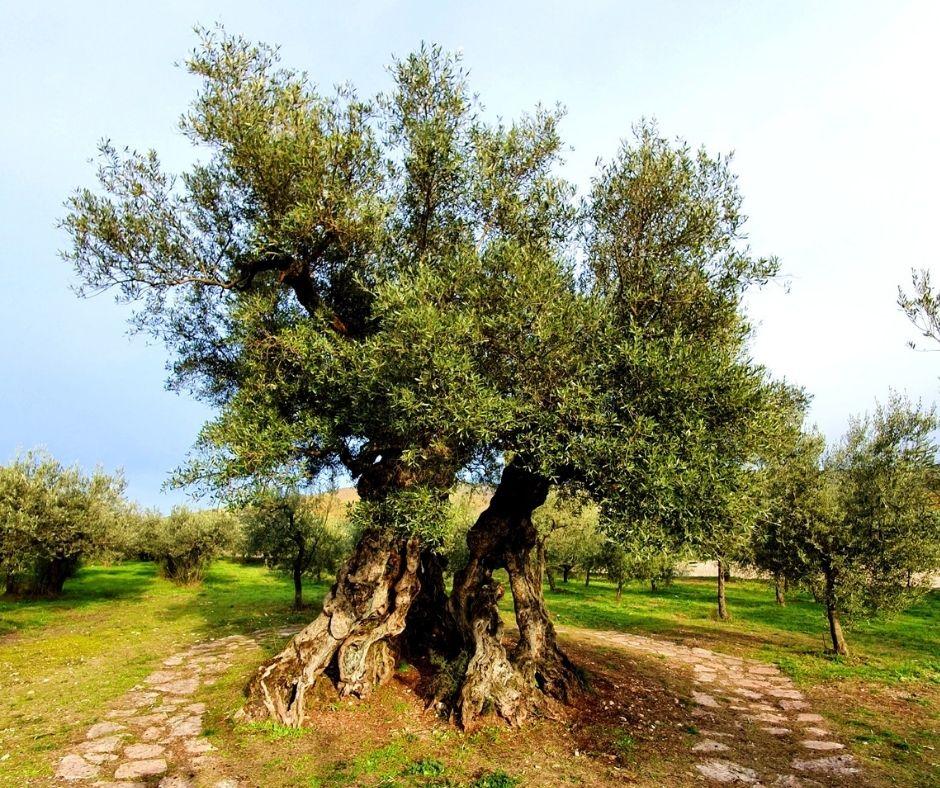
Where has everyone gone? This might be what the thousand year old olive tree of Bovara, a small fraction of the Umbrian municipality of Trevi, is wondering. You got it right … a thousand year old!
It is called the Olive tree of Sant’Emiliano because it seems that the bishop of Trevi Emiliano was tied to its branches and beheaded … in 304 BC! The martyrdom of Saint Emilian with reference to an olive tree can be read in an ancient code dating back to the 9th century. It is located in the grounds that always belonged to the Benedictine abbey just a few hundred meters away: this testifies to the will of the monks to reintroduce the cultivation of the olive tree in their communities.
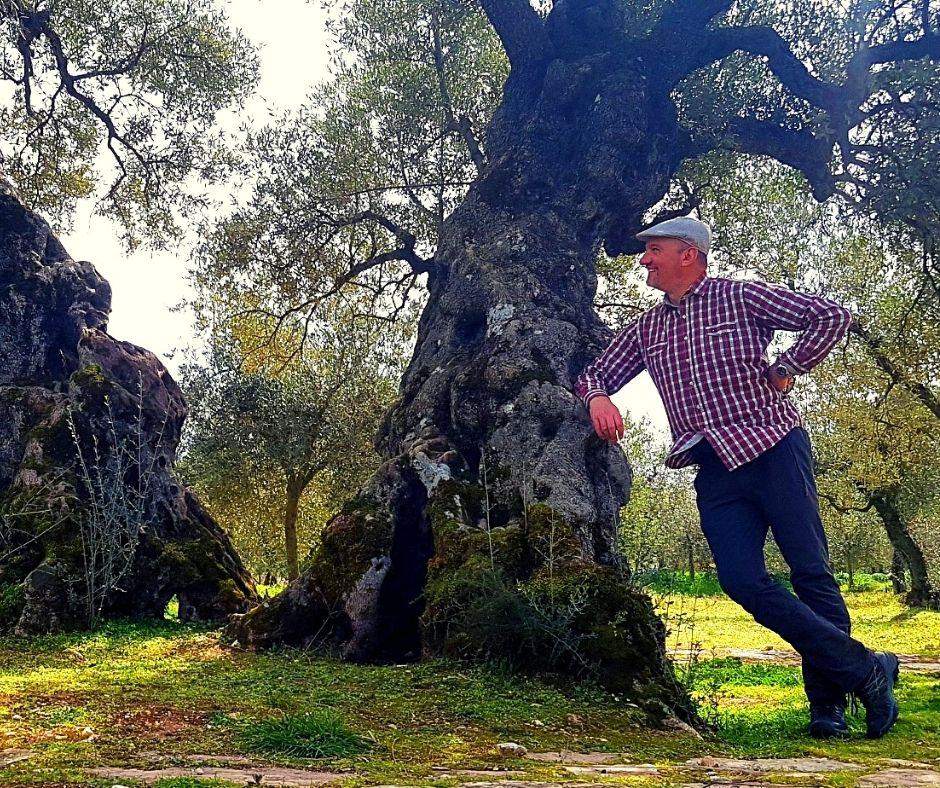
Our olive tree was already there in the time of Diocletian! The first men the tree saw walking around were dressed in tunics and today we visit it wearing trousers and hiking shoes.
Of course in 1700 years it must have seen a lot of things! I am always enchanted in front of the monumental trees: with their longevity, they are silent witnesses of history. We can certainly say that they represent a real … natural heritage for the territory in which they are located!
The plant ages very well: it has lost its inner heart, but keeps the outer trunks that build a beautiful winding shape. Undoubtedly it is a strong plant: it is located at low altitude. Numerous frosts have followed over the years, but it has resisted. Its trunk at the base has a circumference of 9 meters, while its height is 5 meters.
The plant has therefore been the protagonist of human affairs for millennia: recently it may have wondered where people have gone, but calmly awaits us. Soon we will return to travel and during the Umbria, Assisi & Le Marche tour we will meet it again. When you get the chance to know and admire it, I’m sure you will feel its whole long history. And we will make a feast under the old tree by serving our beloved guests a bruschetta (thick slices of bread grilled, rubbed with garlic, drizzled with olive oil, topped with tomatoes and herbs) and local Sagrantino di Montefalco red wine!