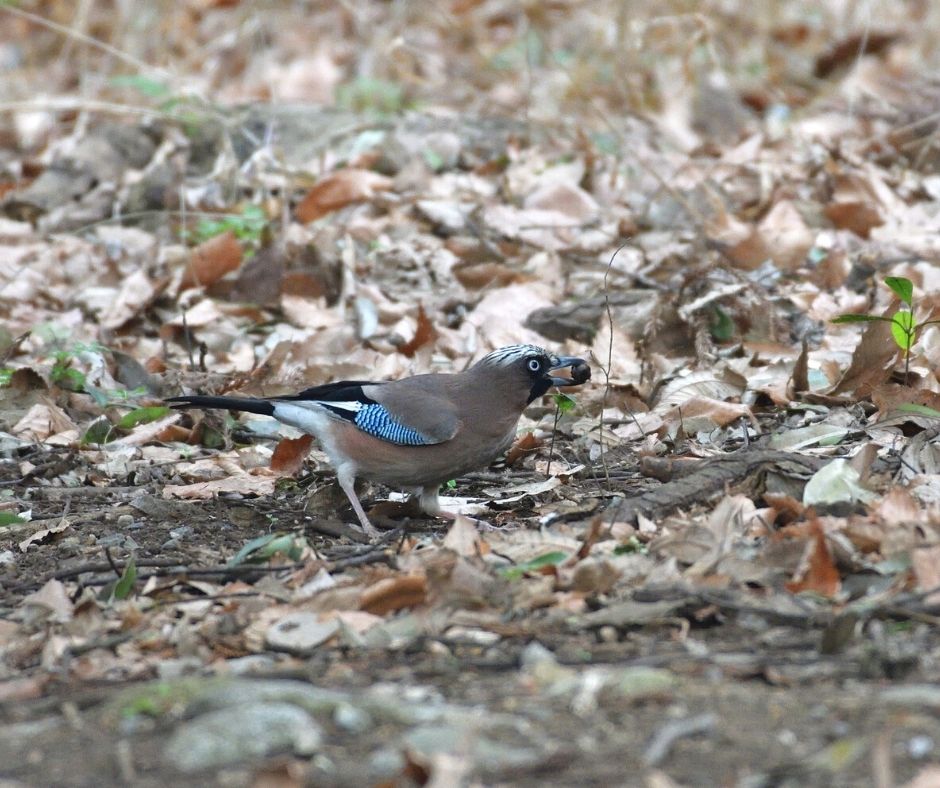
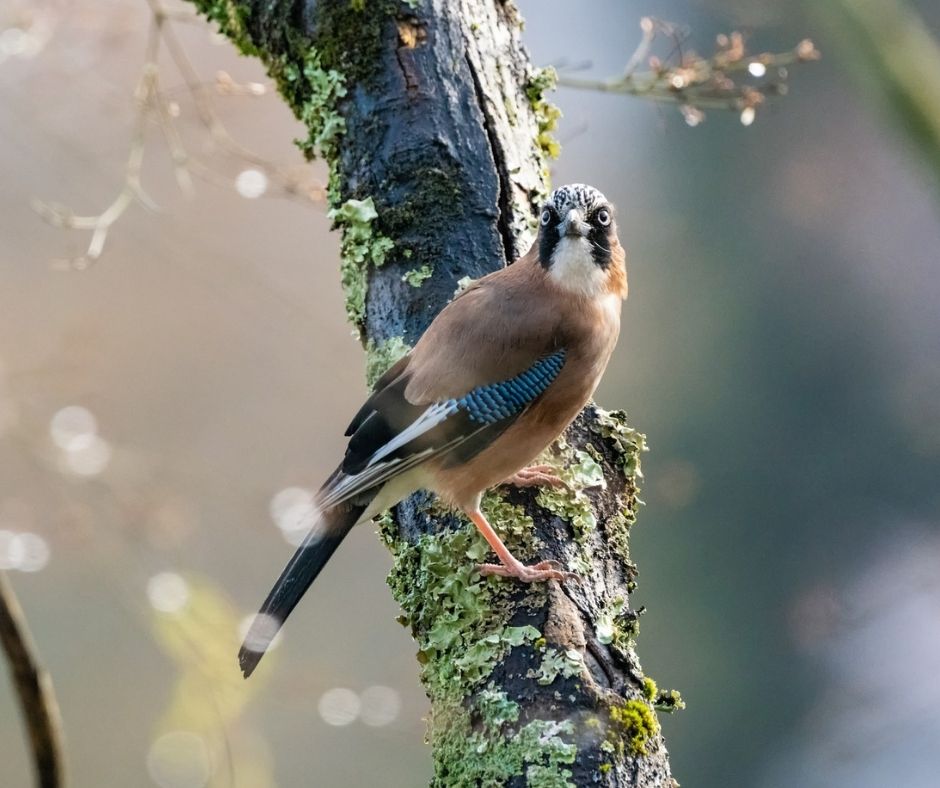
I was sitting on the sofa to rest for a while when I read an article published by the British newspaper, The Guardian. It spoke of two abandoned fields near Monks Wood, a nature reserve in Cambridgeshire, which have become a young forest with about 132 trees per hectare (53 per acre), 57% of which are oaks. Do you know who planted them? Birds! The article explains that «thrushes spread seeds of bramble, blackthorn and hawthorn, and this scrub then provided natural thorny tree “guards” for oaks that grew from acorns buried in the ground by jays».
In fact, in Italian “acorn” is ghianda and “jay” is called ghiandaia precisely because the favorite dish of this bird are the acorns of the oaks! (But it also feeds on chestnuts, hazelnuts, berries, fruit, insects, eggs, larvae…). The jay hides its supplies in the bark of trees or in the soil (under the leaves, under the moss, among the roots …) in order to eat them during the year, especially in cold or less favorable seasons, but it does not always consume its supply of food (it forgets it too!), so, some of the seeds germinate, triggering a natural reforestation.
In Italy the jay is very widespread and obviously prefers wooded areas. It can be seen flying from one branch to another or hopping on the ground throughout the year because it is sedentary (it does not migrate). In April, couples begin to build a nest among the branches of the trees (only about 2 meters high!) That is a real work of art: a cradle made of brushwood, branches, hay threads and softened to ‘ interior from thin roots and moss.
The bird’s scientific name is Garrulus Glandarius and summarizes its two main characteristics: glandurus means that it “feeds on acorns” and we have already discovered why! But garrulus? It means “chatty” !! Yes, because the jay is a very noisy bird. Did you know that it is an excellent imitator of both the song of other birds and sounds and noises? Prudent and suspicious, it sounds the alarm in the woods when there is an intruder! When someone (animal or human) passes by, it signals it with shrill high pitches.
Have you ever seen it? You can recognize it well: red-brown plumage, black tail and … beautiful wings stained with white and blue! It is about 34 centimeters long and weighs from 150 to 190 grams. Too bad she’s a little shy, she rarely gets noticed for a long time!
Irene T.