I am a technology enthusiast: always looking for web applications that can help me in my work and in my passions. I like to communicate quickly and effectively; I am interested in everything related to photography and video. I must admit it: I am a 51-year-old geek.
There is a moment, however, when I feel like I want to go back to handwriting: a note for a friend, a letter, a travel diary. This happens at the Amalfi Paper Museum.
During the tour on the Amalfi Coast, we walk a path in the “Valley of the Mills” between walls and citrus groves: this path leads us to the outskirts of Amalfi, right where an ancient paper mill was transformed into a museum in 1969. The predominant element in the valley is a huge amount of water in a vigorous stream that allowed in past the movement of machinery to produce handmade paper.
The Maritime Republics are among the first places where the use of paper was found: Venice, Pisa, Genoa, and finally Amalfi, the oldest. Paper mills were introduced in the 12th and 13th centuries. The Maritime Republics had commercial relations with the far East, and this certainly allowed them to learn how to make paper, just as it is possible that skilled labor arrived in Italy, bringing that technology.
A commerce-based town like Amalfi felt the need of a large amount paper to sign contracts. One of the most famous buyers of the Amalfi paper was the Pope. As you can imagine the Pope had a great need of writing documents on a precious, high-quality paper. Nowadays the paper is still produced, but in a a much smaller amount. The modern uses of paper are mostly relegated to letter paper for invitations (weddings, baptism and so on).
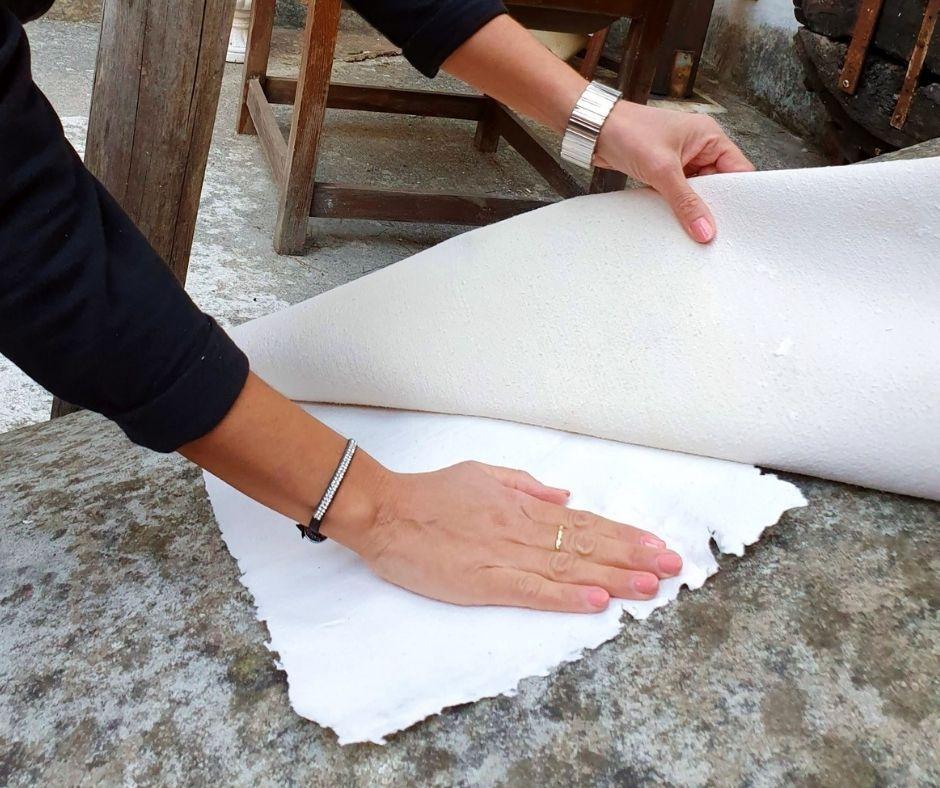
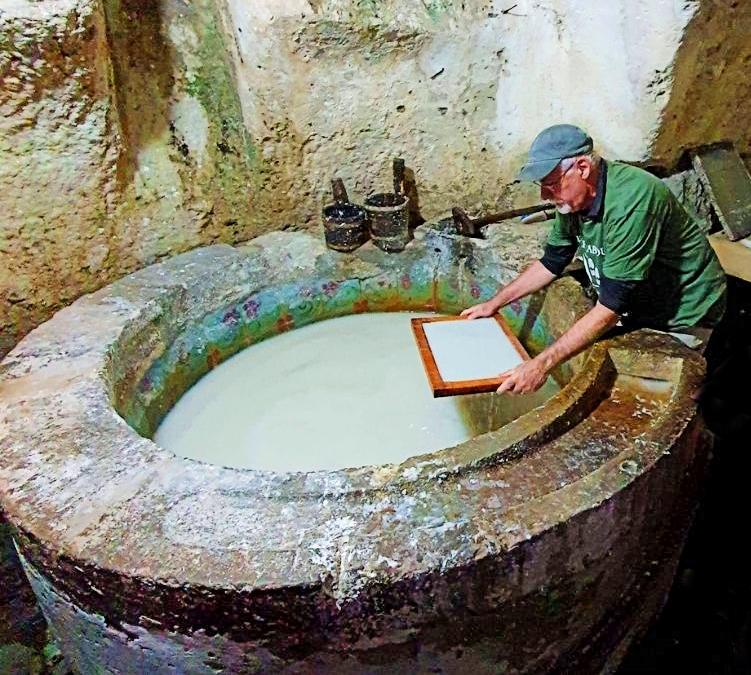
Amalfi paper is very precious. The sheet is called “bambagina” (“bambagia” is a waste cotton) due to the production process that starts from white linen, cotton, and hemp rags (and not from wood cellulose). In the Museum we can assist and collaborate in the making of a piece of paper, with the same processing techniques that were used in the Middle Ages. There is also an exhibition of photographs and document prints. The ancient noble families of the city even had their filigree coats of arms made on the sheets. Interested? Look at their website: https://bit.ly/3nnKvlL
I am sure that when we will visit it together, you too will want to buy a souvenir of this paper to write by hand … but, be careful! Once the text is written, it cannot be deleted, moved, copied, and pasted! 😉